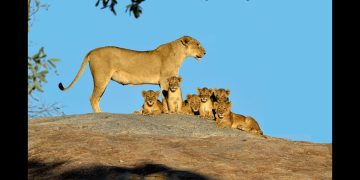
Lions in Africa are grappling with numerous challenges that threaten their survival and ability to thrive. Kruger National Park, one of the continent’s largest wildlife sanctuaries, exemplifies the complex hurdles faced by these majestic predators.
Although the park provides a protected habitat, it is not insulated from the effects of human activity. Encroachment on the park’s boundaries and habitat fragmentation caused by agricultural expansion and infrastructure development limit the lions’ access to critical resources. These changes disrupt the delicate balance of the ecosystem, making prey less available and intensifying competition among predators.
Another significant challenge is the restriction of natural migratory patterns. Lions typically roam across vast territories in search of food, mates, and shelter. However, the park’s enclosed boundaries can confine their movement, leading to overcrowding in certain areas and heightened territorial disputes. This confinement also makes it difficult for lions to adapt to seasonal changes in prey distribution.
While Kruger National Park is a haven for wildlife conservation, these ongoing issues highlight the broader struggle to ensure the long-term survival of lion populations. Addressing these challenges will require a concerted effort to balance human development with conservation strategies that preserve Africa’s most iconic species.